 Agaves
 Barrel Cacti
 Joshua Trees
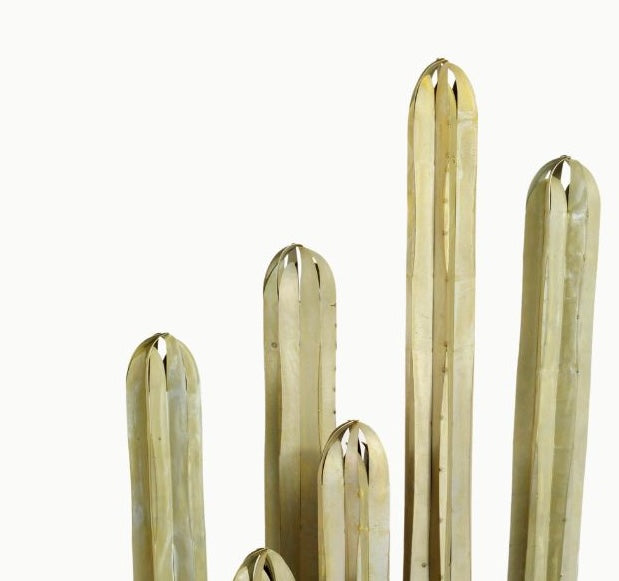 Mexican Fence Post
 Ocotillo
 Paddle Cactus
 Palm Trees
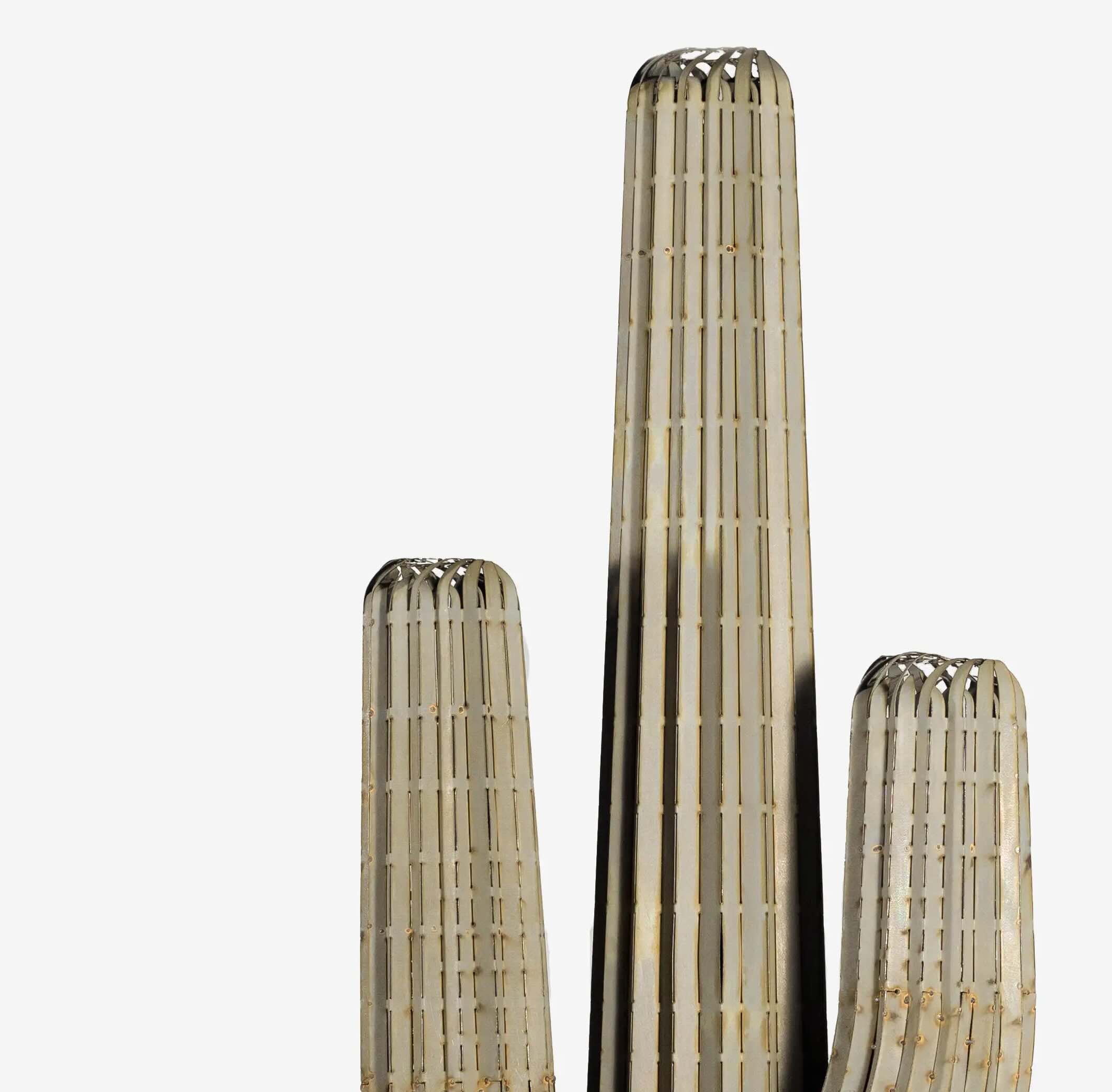 Saguaros
 Succulents
Fire-Resistant Fencing in California: What You Need to Know

When wildfire threatens a home, most people think about plants, mulch, and roof vents. Few think about the fence. But in over 200 fire experiments conducted by the National Institute of Standards and Technology (NIST), fencing was identified as one of the most significant contributors to fire spreading from the yard to the structure. A burning wood fence can carry flames directly to your home in under four minutes. In California, where ember-driven wildfires are increasingly frequent and intense, the material your fence is made from can make a meaningful difference to whether your home survives.
California has now made fire-resistant fencing a legal requirement in many areas, not just a recommendation. This guide explains what the law requires, which materials qualify, and how non-combustible fencing fits into a broader defensible space strategy.
Why Fencing Matters in a Wildfire
Most homes lost in wildfires are not ignited by direct flame contact. They’re ignited by embers, wind-blown firebrands that can travel up to a mile ahead of the fire front, landing on or near combustible surfaces and starting new ignitions. A wood fence presents a continuous line of combustible material running from the vegetation at the property edge directly to the structure. Once ignited, it functions like a fuse.
The NIST research found that flames rushed along mulch lining the base of fences, and that pairs of fences burning in close proximity were entirely engulfed within minutes. The connection between vegetation, fencing, and structure is one of the most common and most preventable pathways for home loss in wildfires.
Non-combustible fencing, steel, aluminum, masonry, breaks this pathway. It cannot ignite from embers, cannot carry flames along the property line, and does not contribute fuel to the fire around your home.
California Law: What’s Required
California’s Building Code (CBC) and Public Resources Code (PRC) 4291 now restrict combustible fencing materials within the defensible space zones surrounding structures in designated fire hazard areas. The key requirements:
| Zone | Distance | Fencing Requirement |
|---|---|---|
| Zone 0 | 0–5 ft from structure | Non-combustible materials only. Wood, vinyl, and bamboo fencing prohibited. Steel, aluminum, masonry required. |
| Zone 1 | 5–30 ft | Combustible fencing strongly discouraged. Any fencing attached to the structure must be non-combustible. |
| Zone 2 | 30–100 ft | Reduce combustible materials. Non-combustible fencing recommended, particularly where fence lines connect to Zone 1. |
California Assembly Bill 3074 (AB 3074) mandates Zone 0 ember-resistance requirements. New regulations are being finalised with enforcement expected from 2026. Property owners in designated high fire risk zones will have three years to comply, with no grandfathering provisions for existing fences.
Several counties have already implemented stricter local standards:
-
Los Angeles County: enforces brush clearance and non-combustible fencing requirements for attached structures
-
San Diego County: requires 50 feet of clearance in Zone 1 (vs. the standard 30 feet)
-
Orange, Ventura, Santa Barbara, and Marin Counties: require non-combustible materials where fences attach to structures
Always verify requirements with your local fire authority or building department, as county standards may exceed state minimums.
Which Fencing Materials Are Compliant?
| Material | Zone 0 Compliant? | Fire Behaviour | Notes |
|---|---|---|---|
| Steel | Yes | Non-combustible | Does not ignite, burn, or contribute fuel. Structurally stable at temperatures exceeding 1,200°F. Preferred by CAL FIRE for defensible space. |
| Aluminum | Yes | Non-combustible | Non-combustible. Lighter than steel. Limited privacy in some styles. Good for gates and ornamental fencing. |
| Masonry (concrete, brick, stone) | Yes | Non-combustible | Excellent thermal mass. Highest fire protection. High installation cost. |
| Fiber cement | Yes | Fire-resistant | Looks like painted wood. Good alternative for homeowners wanting a traditional aesthetic with better fire performance. |
| Fire-retardant treated wood (FRTW) | No | Combustible (slower ignition) | Treated wood slows ignition but does not meet non-combustible standards for Zone 0. May be permitted in Zones 1–2 — verify locally. |
| Vinyl / PVC | No | Combustible | Melts and deforms under radiant heat. Failed ASTM E5768 testing. Releases toxic fumes. Not compliant in high-risk zones. |
| Untreated wood | No | Highly combustible | Ignites at 400–500°F. Functions as a continuous fuel pathway to the structure. Prohibited in Zone 0. |
| Bamboo | No | Highly combustible | Prohibited in Zone 0. Extremely fast to ignite. |
How Steel Fencing Fits Into Your Defensible Space Plan
Non-combustible fencing isn’t just about compliance — it’s one of the most practical steps you can take to reduce ignition risk at your property boundary. Here’s how it works within the zone framework:
Zone 0 (0–5 feet): The critical buffer
This is the zone where non-combustible fencing has the greatest impact. Any fence within 5 feet of your home, garage, deck, or shed must be non-combustible under AB 3074. Steel fencing and steel gates are the most common solution, giving you privacy and structure without adding any fuel load in the most vulnerable zone around your home.
If your current fence is attached to your home and made of wood, that connection is one of the highest-priority changes you can make to reduce wildfire risk. Even replacing just the section of fence closest to the structure with a steel alternative makes a meaningful difference.
Zone 1 (5–30 feet): Reducing continuity
Steel fencing in Zone 1 breaks the continuous fuel pathway between vegetation at the property boundary and your home. Where neighbouring buildings are within 20 feet of each other, Fire Safe Marin specifically recommends steel perimeter fencing to reduce radiant heat exposure and provide protection if an adjacent building ignites.
Fencing attached to your structure
CAL FIRE and local fire agencies specifically flag fencing that attaches directly to a building as the highest risk scenario — it creates a direct bridge from the property perimeter to the structure. If your fence connects to your home, garage, or deck at any point, that connection should be steel or other non-combustible material as a priority over any other section of the fence.
Insurance Implications of Fire-Resistant Fencing
California homeowners in high fire hazard zones have faced increasing scrutiny from insurers in recent years, with premiums rising sharply or policies being cancelled in areas at elevated risk. Fire-resistant upgrades, including non-combustible fencing, can positively affect your insurance standing:
-
Many California insurance carriers now offer premium discounts of 5–15% annually for properties with fire-resistant fencing and defensible space compliance.
-
The California FAIR Plan, the state-mandated insurer of last resort, considers fire-resistant construction and defensible space in its underwriting.
-
Non-combustible fencing may be documented as part of a defensible space inspection, which is increasingly used by insurers to assess risk.
-
Contact your insurance carrier directly to ask how Zone 0 compliance and non-combustible fencing may affect your premium or coverage terms.
How to Find Out If Your Property Is in a High Fire Hazard Zone
California publishes two fire hazard severity zone maps, a state map for county and unincorporated areas, and city-specific maps for incorporated areas. Check both:
-
CAL FIRE Fire Hazard Severity Zone Viewer: osfm.fire.ca.gov
-
Your city or county fire department website for local ordinance maps
-
If your property appears on either map in a High or Very High severity area, Zone 0 non-combustible requirements apply
If you’re unsure, contact your local building department or fire protection district directly before making any fencing decisions.
Frequently Asked Questions
Is wood fencing banned in California?
Not outright, but wood fencing is prohibited within Zone 0 (0–5 feet from structures) in designated high fire risk areas under AB 3074, with enforcement expected from 2026. Wood fencing may still be permitted further from structures, but non-combustible alternatives are strongly recommended throughout all zones in high-risk areas.
Can I make my existing wood fence fire-resistant with treatment?
Fire-retardant treatments can slow ignition but cannot make a wood fence non-combustible. No wood treatment currently meets the non-combustible standard required for Zone 0. Treated wood may have some application in Zones 1 and 2, but always verify acceptance with your local fire authority before installation.
Do I have to replace my entire fence?
Not necessarily. The highest priority is the section of fence within Zone 0 (5 feet of your structure) and any section attached directly to your home. Replacing just these sections with steel or another non-combustible material makes the most meaningful safety improvement and may be the most cost-effective starting point.
Does non-combustible fencing affect home insurance?
Yes, potentially positively. Many California insurers offer discounts for fire-resistant upgrades including non-combustible fencing. Contact your carrier directly to understand how Zone 0 compliance may affect your specific policy and premium.
What about vinyl fencing? Isn't it better than wood?
No. Vinyl failed ASTM E5768 fire testing and is not compliant with Zone 0 requirements. It may not ignite as easily as wood from embers alone, but it melts and deforms under radiant heat, releases toxic fumes, and will burn when exposed to direct flame from nearby burning debris. It does not meet non-combustible standards.
Protect Your Property’s Perimeter
Desert Steel’s handcrafted steel products are built for fire-prone environments. Our steel plants, planters, and landscape pieces are 100% non-combustible - the same material properties that make steel fencing the right choice for Zone 0 make our products the right choice for fire-safe landscaping throughout your defensible space.
Whether you’re starting a full Zone 0 redesign or simply replacing the combustible materials closest to your home, explore how non-combustible steel design can transform a compliance requirement into a landscape you’re proud of. Browse the our metal plant collection, or take advantage of our free landscape design service to create your dream landscape.


