 Agaves
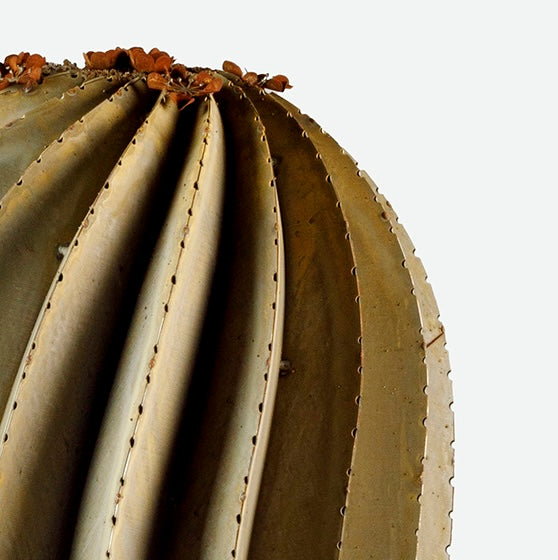 Barrel Cacti
 Joshua Trees
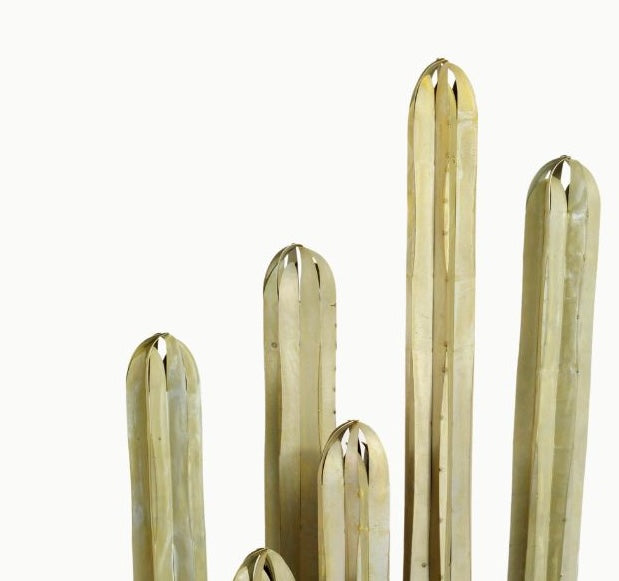 Mexican Fence Post
 Ocotillo
 Paddle Cactus
 Palm Trees
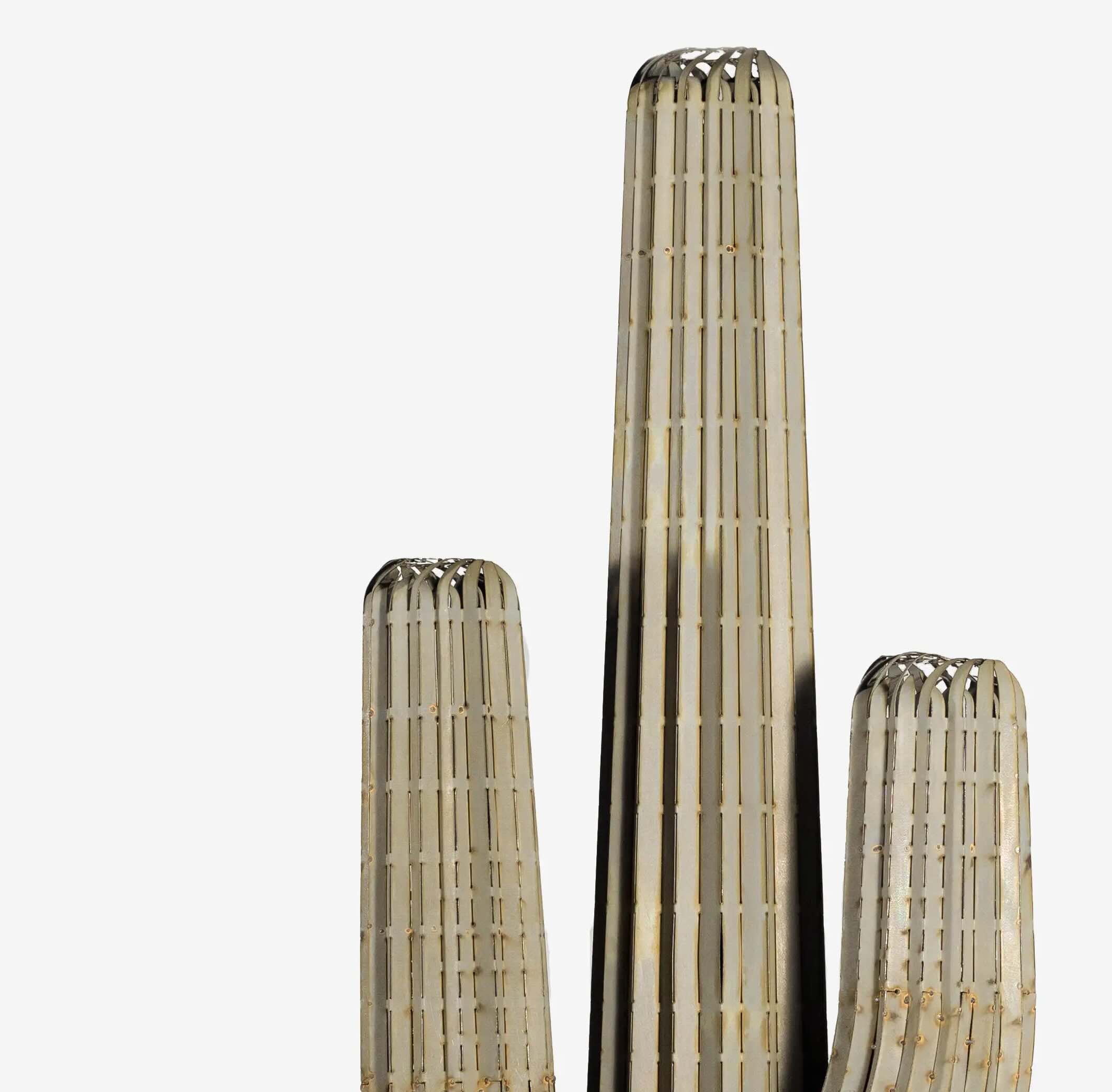 Saguaros
 Succulents
Steel vs Wood Fencing: A Fire Safety Comparison

In a wildfire, your fence doesn’t just sit there. It either burns, or it doesn’t. And that distinction can determine whether fire reaches your home. Research by the National Institute of Standards and Technology (NIST) found that a wood fence can be fully engulfed within four minutes of ignition, carrying flames directly to a structure it’s connected to. Steel fencing, by contrast, is non-combustible. It doesn’t ignite. It doesn’t carry flame. It doesn’t add fuel.
But fire safety is just one dimension of the steel vs. wood fencing comparison. This guide covers the full picture: fire performance, durability, maintenance, cost, and compliance, so you can make the right decision for your property.
Fire Performance: The Core Difference
| Factor | Wood Fencing | Steel Fencing |
|---|---|---|
| Combustibility | Highly combustible. Ignites at 400–500°F, temperatures reached almost instantly in wildfire conditions. | Non-combustible. Structurally stable at temperatures exceeding 1,200°F. |
| Ember ignition | High risk. Embers landing on or near wood fencing can cause ignition, especially when combined with debris at the base. | Does not ignite from ember exposure. Breaks the ember-to-structure ignition pathway. |
| Fire spread | Functions as a fuel pathway. A burning fence attached to a home carries flames directly to the structure. | Does not carry flame. Stops fire from travelling along the property boundary to the home. |
| Radiant heat | Burns rapidly, generating intense radiant heat that can ignite adjacent combustibles. | Reflects and withstands radiant heat without igniting or contributing additional fuel. |
| Zone 0 compliance (CA) | Not compliant. Prohibited within 5 feet of structures in California high fire hazard zones under AB 3074. | Fully compliant. Non-combustible steel is the recommended material for Zone 0 by CAL FIRE. |
| NIST research finding | Fences entirely engulfed in under 4 minutes. Acts as a wick carrying fire to structure. | Non-combustible fencing recommended as a replacement for combustible materials in all WUI zones. |
The science is straightforward. Wood fencing ignites at temperatures that occur almost instantaneously in wildfire conditions. Once burning, it functions like a continuous fuel pathway from wherever the fire starts to wherever the fence ends, which, in most residential properties, is the wall of the house. Steel eliminates this pathway entirely.
Durability & Lifespan
Fire safety aside, the long-term performance of a fence affects total cost of ownership significantly.
| Factor | Wood Fencing | Steel Fencing |
|---|---|---|
| Typical lifespan | 10–20 years with regular maintenance. Less in wet climates or areas with insect pressure. | 30–50+ years with quality finish. No comparable failure timeline. |
| Rot & decay | Common failure mode, especially at posts. Ground-contact posts rot within 5–10 years in many climates. | Does not rot. Steel posts do not degrade at the soil line. |
| Warping & splitting | Common in dry, hot conditions. Boards warp, split, and loosen over time. | Does not warp or split. Maintains structural integrity in heat and cold. |
| Insect damage | Susceptible to termites, carpenter ants, and wood-boring insects. | Not susceptible to insect damage. |
| Corrosion | Rot is the primary degradation mechanism rather than corrosion. | Can corrode if the coating is damaged. Galvanised or powder-coated steel significantly reduces corrosion risk. Inspect coatings annually. |
| Wind resistance | Solid wood panels act as a sail in high winds. Post failure is common in storm conditions. | Heavy gauge steel provides excellent wind resistance. Well-anchored steel posts outperform wood in high wind events. |
Maintenance Requirements
| Task | Wood Fencing | Steel Fencing |
|---|---|---|
| Staining / sealing | Every 2–3 years to prevent moisture ingress and UV degradation. | Not required. |
| Painting | Every 3–5 years as paint cracks and peels. | Powder coating lasts 10–20 years. Touch up chips promptly to prevent rust. |
| Board replacement | Individual boards split, warp, and rot. Regular replacement needed throughout the fence's life. | Panels do not degrade at the same rate. Replacements rare. |
| Post replacement | The most common and costly maintenance item. Wood posts rot at the soil line. | Steel posts do not rot. Corrosion at the soil line possible if coating is compromised. |
| Debris clearance | Critical for fire safety. Leaves and dry debris accumulate at the base and dramatically increase ignition risk. | Still important to clear debris from the base, but steel itself does not contribute additional ignition risk. |
| Overall burden | High. Annual inspection plus periodic staining, painting, and board/post replacement. | Low. Annual inspection of coating integrity plus debris clearance. |
Cost Comparison
Upfront cost is often the first consideration, but total cost of ownership over 20–30 years tells a very different story.
| Task | Wood Fencing | Steel Fencing |
|---|---|---|
| Staining / sealing | Every 2–3 years to prevent moisture ingress and UV degradation. | Not required. |
| Painting | Every 3–5 years as paint cracks and peels. | Powder coating lasts 10–20 years. Touch up chips promptly to prevent rust. |
| Board replacement | Individual boards split, warp, and rot. Regular replacement needed throughout the fence's life. | Panels do not degrade at the same rate. Replacements rare. |
| Post replacement | The most common and costly maintenance item. Wood posts rot at the soil line. | Steel posts do not rot. Corrosion at the soil line possible if coating is compromised. |
| Debris clearance | Critical for fire safety. Leaves and dry debris accumulate at the base and dramatically increase ignition risk. | Still important to clear debris from the base, but steel itself does not contribute additional ignition risk. |
| Overall burden | High. Annual inspection plus periodic staining, painting, and board/post replacement. | Low. Annual inspection of coating integrity plus debris clearance. |
When you factor in maintenance, replacement cycles, and the potential cost of non-compliance with California’s evolving fencing regulations, the total cost of ownership over 20–30 years often favours steel despite the higher upfront material cost.
California Compliance: Where They Stand
California’s fire regulations are moving decisively away from combustible fencing materials in high-risk zones:
-
Zone 0 (0–5 ft from structures): Wood, vinyl, and bamboo fencing prohibited in designated high fire hazard zones under AB 3074. Steel, aluminum, and masonry required. Enforcement from 2026, no grandfathering.
-
Zone 1 (5–30 ft): Non-combustible materials strongly recommended. Any fencing attached to the structure must be non-combustible.
-
Wood fencing may still be permitted further from structures in lower-risk areas, but regulations are tightening across the state.
-
Several counties (LA, San Diego, Ventura, Marin, Orange, Santa Barbara) already enforce stricter standards than state minimums.
If you’re building or replacing a fence in a California high fire hazard zone, installing wood now means planning and paying for a steel replacement within the next few years when enforcement begins. Installing steel now avoids that cost entirely.
When Wood Might Still Make Sense
Steel is the clear choice in fire-prone areas and for Zone 0 compliance. But there are contexts where wood remains a reasonable option:
-
Properties in low-risk fire zones with no Zone 0 restrictions and moderate climate conditions where rot and pest pressure are low
-
Temporary fencing or properties where layout changes are likely within 5–10 years
-
Sections of fencing in Zone 2 or beyond where fire risk is lower and the visual requirement strongly favours a wood aesthetic - combined with non-combustible sections in Zone 0 and Zone 1
In wildfire-prone areas of California, Texas, Arizona, Colorado, or anywhere in the wildland-urban interface, the fire performance difference between wood and steel is too significant to overlook when any fence is within reach of your home.
Does Steel Have to Look Industrial?
One of the most common hesitations about steel fencing is aesthetic. The perception that steel means corrugated industrial panels or chain link is outdated. Modern steel fencing comes in a wide range of styles, from clean privacy panels to ornamental designs, and the material integrates naturally with the kind of fire-safe landscaping that uses gravel, decomposed granite, and sculptural plantings throughout the defensible space zones.
Desert Steel’s handcrafted steel sculptures and planters are designed for exactly this context: outdoor spaces where non-combustible materials are both a requirement and a design opportunity. Steel barrel cacti, metal agaves, and metal saguaros in Zone 0 give you the same visual presence as live plants, with zero combustible material and zero maintenance. They pair naturally with steel fencing to create a landscape that looks cohesive from the boundary all the way to the door.
Summary: Steel vs Wood at a Glance
| Wood | Steel | |
|---|---|---|
| Zone 0 compliant (CA) | No | Yes |
| Combustible | Yes | No |
| Typical lifespan | 10–20 years | 30–50+ years |
| Maintenance burden | High | Low |
| Upfront cost | Lower | Moderate–Higher |
| 20-year total cost | Higher (maintenance + replacement) | Lower (minimal upkeep) |
| Insurance impact (CA) | Potentially negative | Potentially positive (5–15% discount) |
| Fire pathway risk | High – carries flame to structure | None – breaks fire pathway |
Making the Switch
You don’t have to replace your entire fence at once. The highest-priority sections are those within Zone 0 and any section that attaches directly to your home, garage, or deck. Replacing just these sections with a non-combustible steel alternative makes the most meaningful fire safety improvement and brings you into compliance with California’s Zone 0 requirements.
Desert Steel’s handcrafted steel plants are built for the fire-safe landscape. From sculptures and planters that anchor your Zone 0 design, to torches and lanterns that add warmth without combustible fuel. Browse the full collection.


